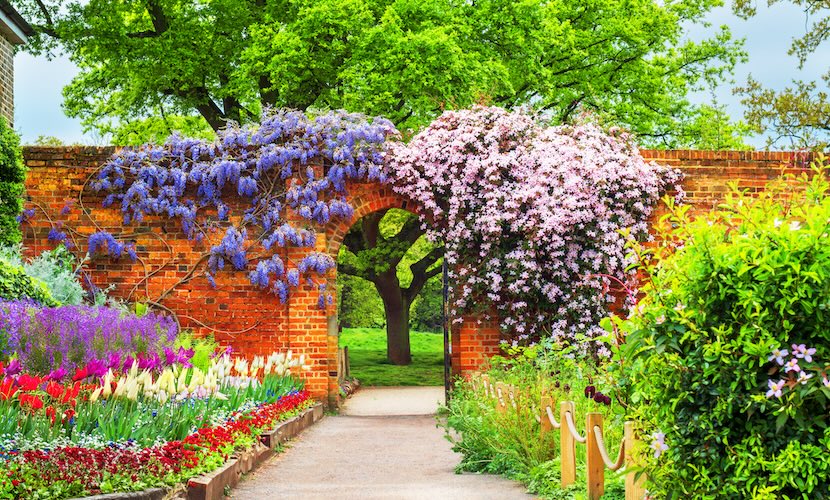
Summer is a great time to get out and about in the UK, and one of the many things to do is to explore some of the wonderful gardens that we have in this country. There are many large picturesque gardens open to the public, for example through The National Garden Scheme, The National Trust and English Heritage. Visiting such gardens is the ideal opportunity to get out the camera to photograph your experience.
And of course, you may also be a keen gardener yourself, and want to capture some shots of how good your own garden is looking this summer.
So in this article we share a few tips on how to get the best garden photography this summer.
As with any genre of photography, one of the secrets to getting the best garden photography is to take time to compose your shot. Whilst the general “rule of thirds” is – as always – a helpful guide, there is a wealth of material to work with in a garden in terms of composing your shot.
Aim to capture interest in the foreground but also have something alluring in the background too. This will draw the viewer in and add dimension. For example you could have a rose arch in the foreground and a path leading away into the background; or a close up of a particularly striking flower of a plant as the foreground and the rich greenery as background.
However you decide to compose your shot, always check that there is nothing in the background that could either make the shot too busy or could spoil the ambience of the shot : for example dead plants, old garden furniture or an obtrusive garden hose. If items can’t be removed, just make sure you get the best camera angle to eliminate them from the shot.
Also experiment with different positions to take your shot. Remember that the most interesting shots are often taken from above or below the subject, rather than on the same level. So have a go at crouching down or climbing up. And for tricky positions, it may help to have a tripod available so that you can position the camera without hand shake.
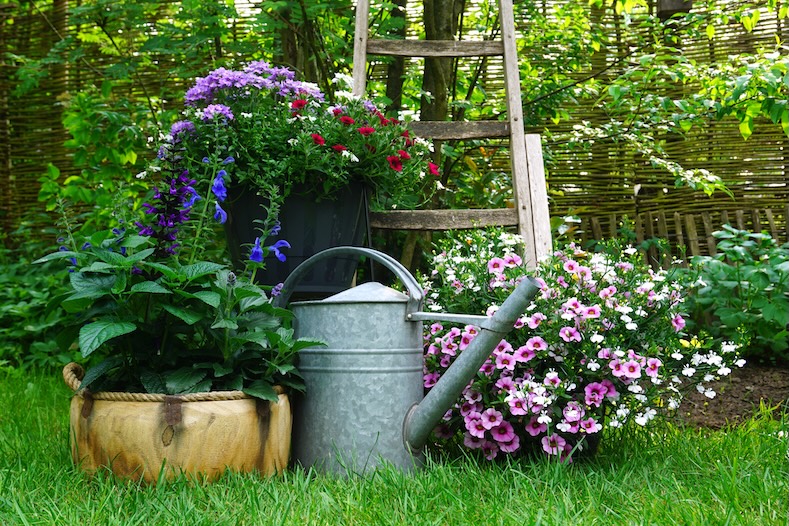
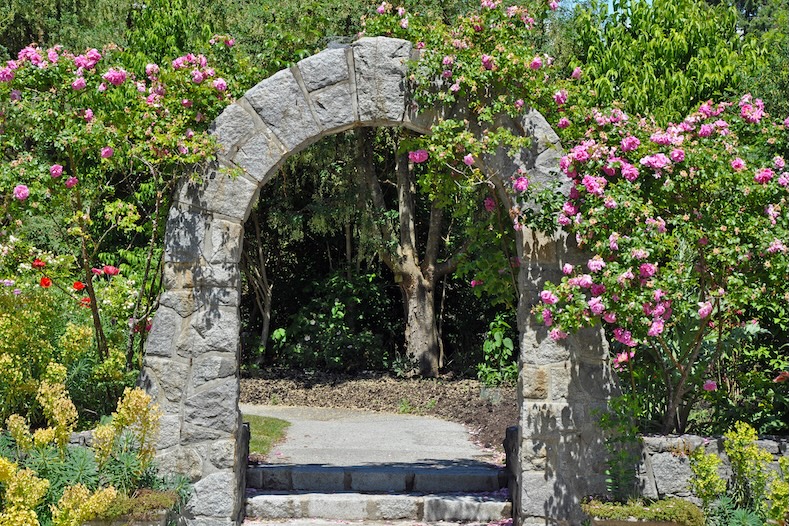
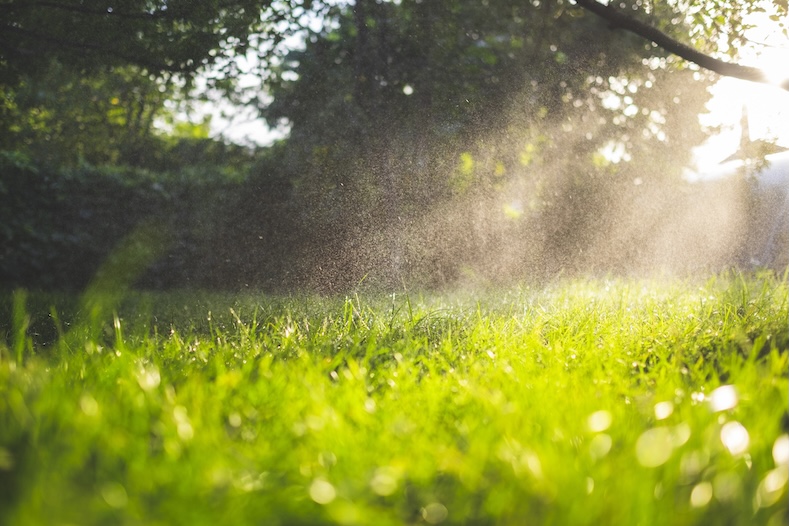
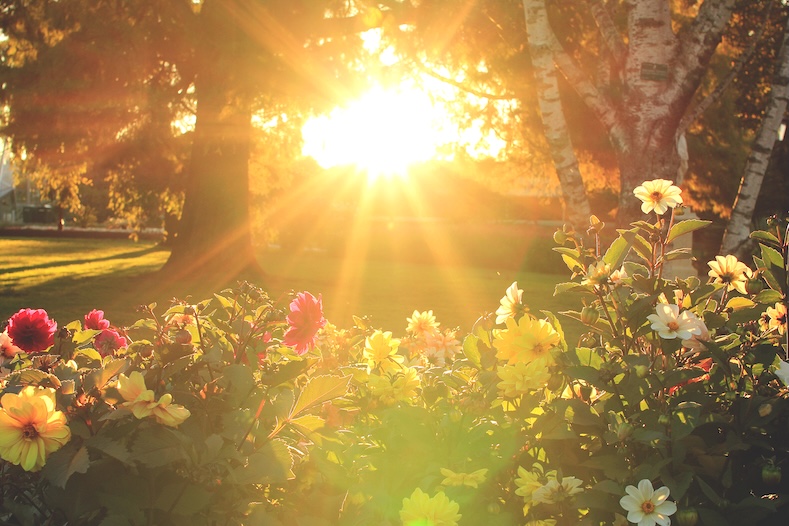
One of the secrets of getting the best garden photography is to choose your time of day carefully. Professional photographers make full use of the so-called golden hour (just after sunrise or before sunset) and blue hour (just before sunrise or after sunset). At these times of day the light is more likely to enable you to bring depth and atmosphere into your shots, and will help to bring colour to life.
First thing in the morning is a particularly favourite time of garden photographers. The soft, diffused light is wonderful to work with, and there is a sense of stillness and calm that can otherwise be lost. And, if you’re really lucky, you may even get a bit of early morning mist to add a dreamy ethereal feel to your photographs.
We’ve just mentioned the beauty of early morning light, and most garden photographers will avoid taking garden photographs in bright sunlight – say around 11:00 -15:00 – as direct sunlight can cause strong shadows and wash out colour. If you are shooting in sunny conditions, try to shoot into the light but make sure that the sun is blocked in some way.
An overcast day provides ideal conditions to get the best garden photography. You have a neutral backdrop against which the glorious summer colours will be able to shine. If your shots are a bit too shadowy you can try to find a way to bounce light into your shot, for example placing white poster board opposite the source of light to bounce light back onto your subject.
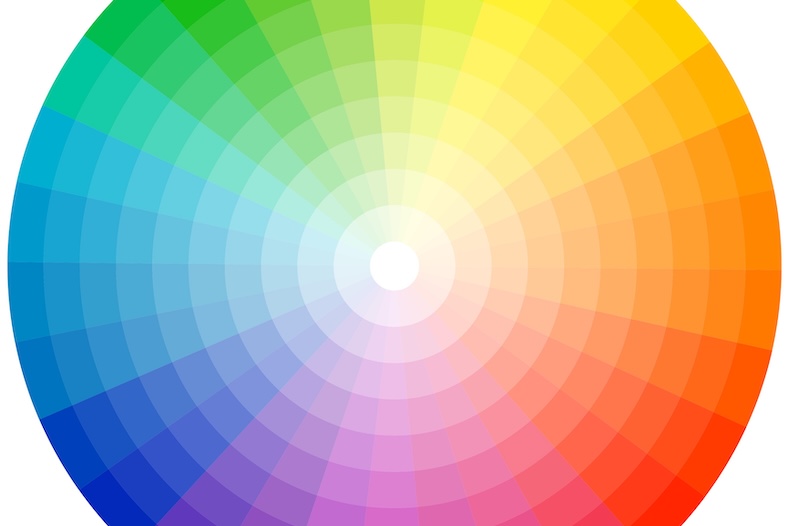
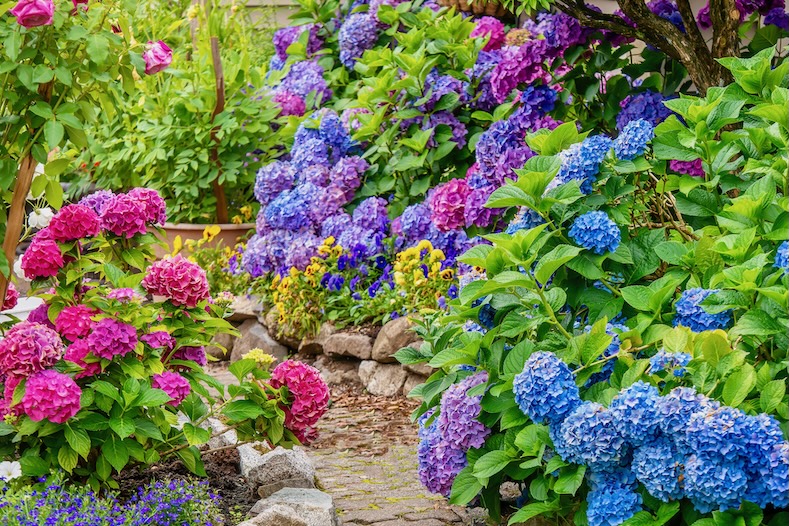
A summer garden is usually full of glorious colour, all of which can be captured effectively in photographs. However, your photos will look better if you have an understanding of which colours do and do not work well together.
One way to gain this understanding is to get hold of a colour wheel to use as a visual reference guide for using colour. You can then decide which colour combinations will help you to create the look you want.
The colour wheel was invented in 1666 by Isaac Newton, and the colour theory on which it is based is a practical combination of art and science. Colours that are opposite each other on the colour wheel are defined as being complementary. Combining these colours will result in high contrast and high impact, and they will appear bright and clearly defined in your image.
Colours that are next to each other on the colour wheel are defined as being analogous. They can be used together but because they are so similar the result could be rather overwhelming. So if you are using analogous colours in your shot, try to identify one as the one dominant colour you want to showcase, and use the other colours as accents.
Any garden could be thought of as a smorgasbord of shapes and textures. And to get the best garden photography be bold about making the most of them.
Look for dramatic shapes such as manicured hedges, twisted trees, and spectacular flowers. These will give your photos an interesting, three-dimensional feel in themselves, but this will be accentuated further if you include other items in the shot to provide a contrast to the main subject.
Think outside the box here. Play around with shapes, and combinations of shapes, and you could capture some stunningly creative garden shots this summer!
We hope that this article has given you some inspiration about how to get the best garden photography this summer and that you are delighted with the results.
Do check back here soon for more helpful photography guides from Print Your Memory.