We’ve all been there.
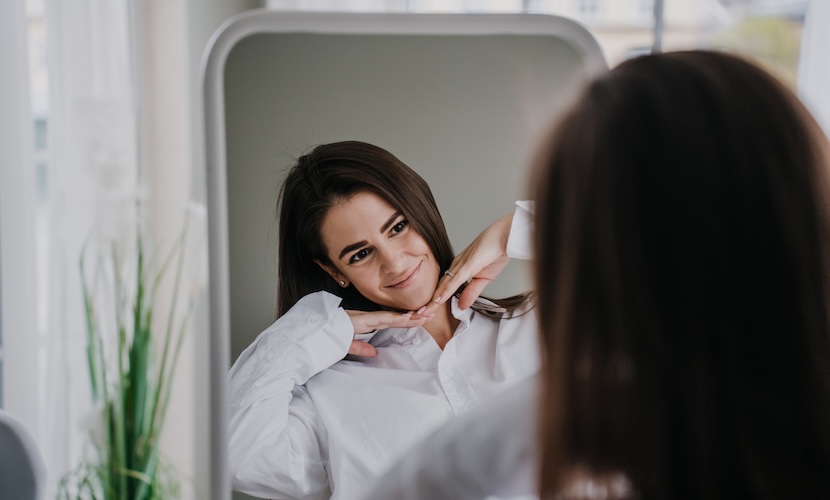
You get ready for a night out, check yourself in the mirror and think, “Yep, looking pretty good!”
Then someone takes a photo.
You look at it and immediately wonder who that strange person is, why one eye appears smaller than the other and whether your face has always been that shape.
How can you look perfectly normal in the mirror but completely different in a photograph?
Well, there’s actually some science behind it. And, thankfully, it’s not because your mirror has been lying to you all these years.
Here’s something you might not have considered. The face you see in the mirror isn’t quite the same as the one everyone else sees.
Mirrors reverse your reflection from front to back, which makes left and right appear swapped. So when you look in the mirror, you’re seeing a reversed version of your face.
And because you’ve been looking at that version of yourself for years, it’s the one you’re most familiar with.
Psychologists call this the mere-exposure effect. Basically, we tend to prefer things we’ve seen before.
In a well-known study from 1977, researchers found that people tended to prefer mirror-reversed photographs of themselves, while their friends preferred the normal photographs.
So that picture you think looks a bit odd? Everyone else might think you look absolutely fine.
Annoying, isn’t it?
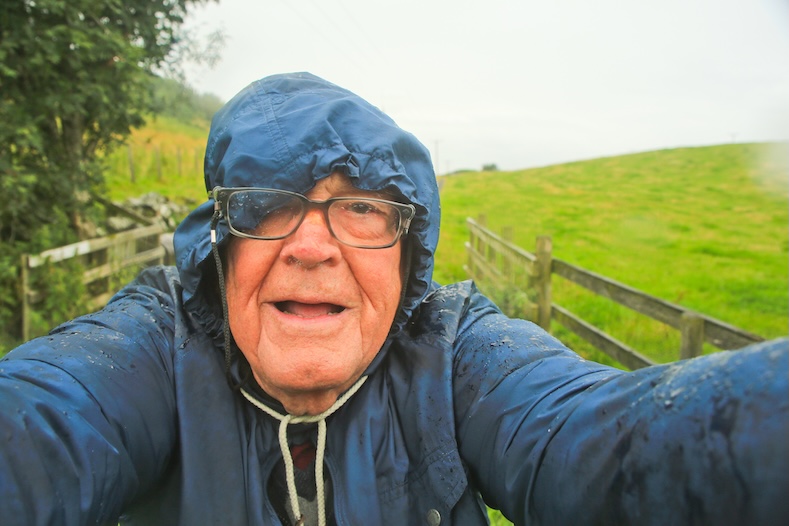
Ever taken a selfie and wondered why your nose suddenly looks enormous?
You can blame the camera for that one. Well, partly.
When you take a photograph very close to your face, the parts nearest the lens appear proportionally larger than those further away.
Your nose, for example, is closer to the camera than your ears. At close distances, that difference can become surprisingly noticeable.
It’s called perspective distortion, and it’s particularly obvious in close-up selfies.
The good news? Your face hasn’t suddenly changed shape.
Try moving your phone further away and taking the photo again. You’ll probably notice a difference.
And if you’re taking a selfie from approximately three inches away, perhaps give yourself a little more breathing room. Your nose will thank you.
Think about what you do when you look in the mirror.
You might tilt your head slightly, straighten your shoulders, adjust your hair or move towards better lighting.
You probably do most of this without even realising.
In other words, you’re constantly making tiny adjustments to what you see.
A photograph doesn’t give you that luxury.
It captures one particular moment, from one particular angle, whether you’re ready or not.
And sometimes that moment happens to be halfway through a sneeze.
There’s only so much a camera can do with that.
When you talk, laugh or pull a face, your expression is constantly changing.
Nobody sees you as a collection of individual frozen moments. They see the whole thing.
But a camera can capture a split second when your mouth is doing something peculiar, your eyes are half-closed or you’re halfway through saying the word “sausages”.
And suddenly, there’s photographic evidence.
It’s worth remembering that people don’t usually see you like that. They see you moving, smiling, talking and reacting.
One awkward photograph doesn’t tell the whole story.
Although, unfortunately, it might still end up in the family WhatsApp group.
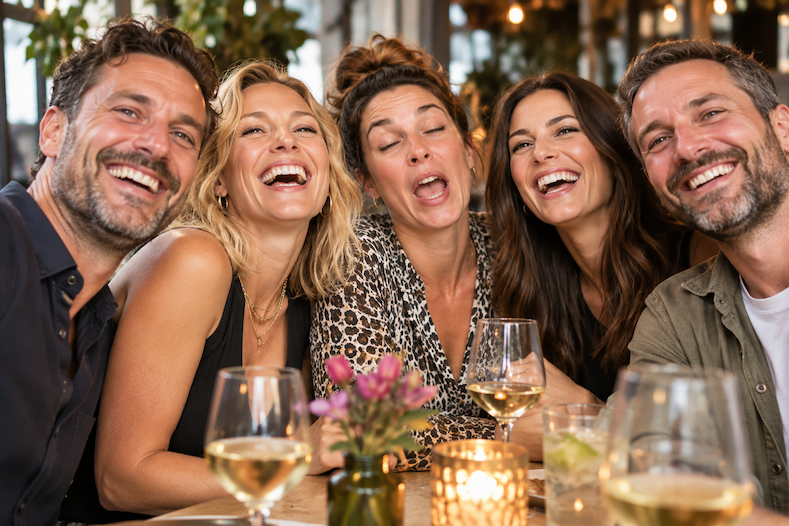
There’s a reason photographers pay so much attention to lighting.
Soft, even light can make skin look smoother and facial features appear more balanced.
Harsh overhead lighting, on the other hand, can create strong shadows beneath your eyes, nose and chin.
And direct flash? Let’s just say it’s rarely anyone’s best friend.
Your bathroom mirror might have lovely, flattering lighting. The restaurant where someone decides to photograph you might have a single spotlight directly above your head.
Same face. Very different result.
If you want photographs you’re happier with, try facing a window during daylight or finding a spot with soft, even lighting.
You don’t need expensive equipment. Sometimes moving a couple of feet makes all the difference.
Have you ever looked at a group photograph and thought everyone looks lovely, apart from you?
You probably didn’t notice your friend’s slightly awkward smile or the fact that someone else was blinking.
But you immediately spotted the tiny detail about yourself that you didn’t like.
We tend to examine photographs of ourselves much more closely than we examine pictures of other people.
And once you’ve decided you don’t like a particular feature, it’s easy to focus on that one thing and ignore everything else.
Meanwhile, your friends are probably looking at the photograph and remembering what a brilliant evening you had.
Or wondering why you made everyone take another 27 pictures.
The answer is that neither gives you a complete picture.
A mirror shows you a reversed reflection that changes as you move.
A camera captures a particular view, affected by distance, perspective, lighting and the exact moment the shutter is pressed.
Neither perfectly represents how other people experience seeing you in real life.
And if you’re wondering whether everyone else sees the version of you in photographs or the version in the mirror, it’s generally closer to the non-reversed view. But remember, people see you in three dimensions and in motion, not as a single frozen image.
So perhaps we should stop treating every unflattering photograph as evidence that our mirrors have been playing tricks on us.

Here’s something else to think about.
Have you ever found an old photograph of yourself that you absolutely hated at the time, only to look at it years later and wonder what you were complaining about?
It’s funny how a little distance can change your opinion.
That picture you nearly deleted might eventually become one of your favourites. Not necessarily because you look perfect, but because of what it reminds you of.
At Print Your Memory, we’re big believers in keeping photographs that mean something to you, even if someone has their eyes closed or your hair isn’t behaving.
And when you find one you really love, why leave it hidden on your phone?
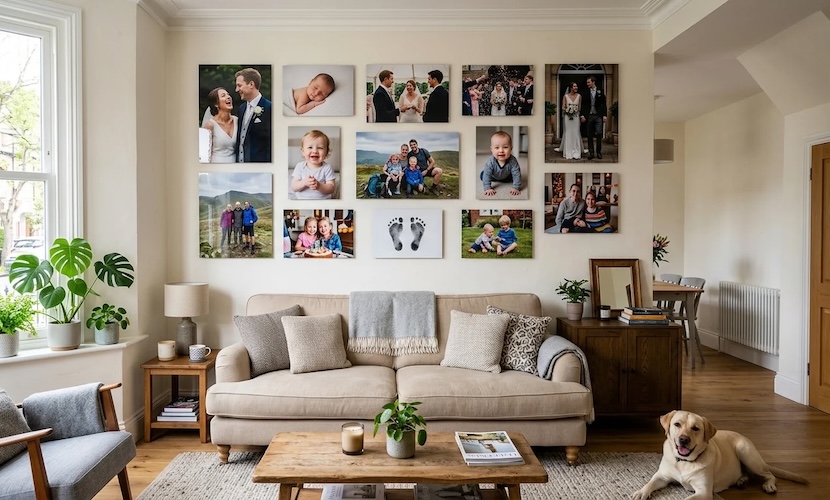
Our personalised metal photo prints give your favourite photographs a proper place in your home, where you can enjoy them every day.
No filters required.
Do you prefer how you look in the mirror or in photographs?
And are you the person who happily poses for every picture, or the one who insists on checking and approving every single shot before anyone’s allowed to post it?
We’d love to know.
Because we’re fairly sure there’s at least one person reading this who has demanded an entire group photograph be retaken because they didn’t like their own face.
You know who you are. 😉