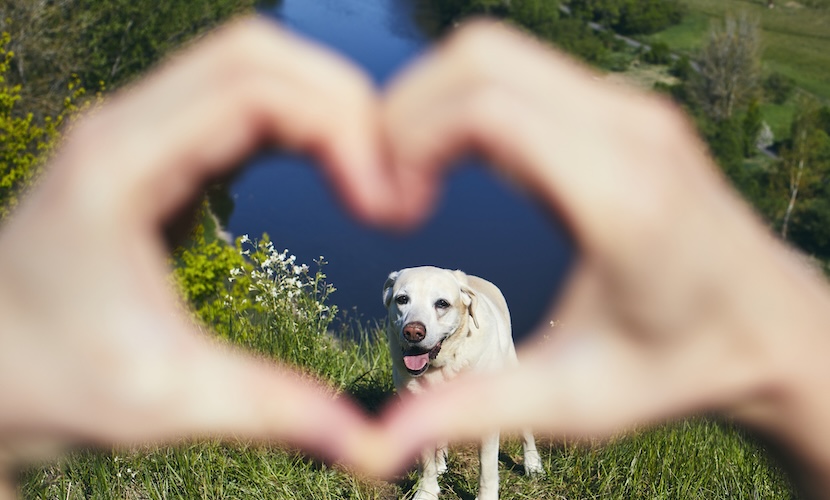
There comes a point when even your dog has had enough of the usual walk.
Same park. Same route. Same tree that apparently requires a full forensic investigation every single time you pass it.
The good news is that a dog-friendly day out doesn’t have to mean another muddy field followed by a pub garden. Across the UK there are castles, forests, gardens, railways and historic ruins where dogs are genuinely welcome too.
We’ve deliberately skipped some of the really obvious choices and gone looking for places you might not already have saved in your phone. So pack the water bowl, poo bags and approximately 400 treats and try somewhere different.
 If your dog has ever fancied themselves as the ruler of a slightly crumbling medieval kingdom, this could be their moment.
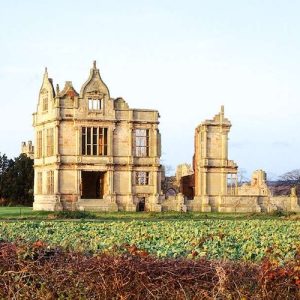
Moreton Corbet Castle is one of those places that looks far too impressive to be quite so little-known. The ruins combine the remains of a medieval castle with an Elizabethan mansion, giving you plenty of towers, walls, archways and slightly dramatic backdrops to explore.
Dogs on leads are welcome, and the site is free to visit. There aren’t any toilets or café facilities at the castle itself, so this is one where a bit of planning beforehand pays off.
It’s also an excellent place for photographs, particularly if your dog is willing to sit majestically in front of a ruined castle rather than immediately turning around to lick themselves.
Good to know: Dogs must be kept on leads and there are uneven surfaces and a hidden drop within the ruins.
 This is the one for dogs whose ideal day involves trees, water and returning to the car looking considerably less clean than when they left it.
Hafren Forest sits near Llanidloes in Mid Wales, close to the source of the River Severn. All of its walking trails are dog-friendly and several routes follow the river through the forest.
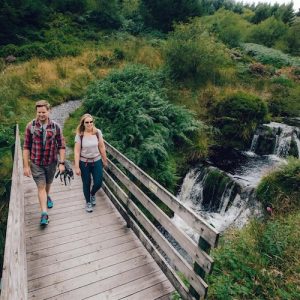
For an easier outing, the Cascades Walk is around half a mile and follows a boardwalk beside the river to a viewing platform over the cascades. If you want something a little more energetic, the Severn-Break-its-Neck Trail is around 1¾ miles and takes you beside the river, through a wildflower meadow and up towards a waterfall.
Yes, that really is its name. Perhaps don’t mention it to Grandma before setting off.
There are longer routes too, so you can choose anything from a gentle wander to a proper leg-stretcher.
Good to know: Dogs are welcome on all trails, but should be kept under responsible control, particularly around wildlife. The main Rhyd-y-benwch car park is free and has accessible toilets.
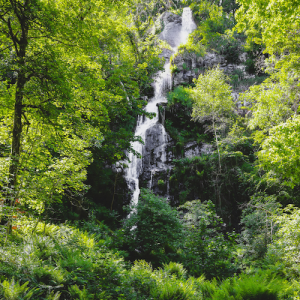 Gardens aren’t always the first thing that spring to mind when you’re planning a day out with a dog. Canonteign Falls is rather more exciting than a few flower beds and a gift shop, though.
Set within 90 acres of Devon countryside, the estate has meadows, woodland, lakes, parkland and waterfalls, including the impressive Lady Exmouth Falls.
There are different walks for different abilities, from easier rambles to routes capable of taking some of the bounce out of even a particularly enthusiastic spaniel.
There’s also a Victorian fern garden and plenty of space to explore, making this a good option when you want somewhere beautiful for yourself without your dog spending the entire day being told they can’t go anywhere.
Good to know: Canonteign Falls is seasonal, so check opening dates and the latest dog information before travelling.
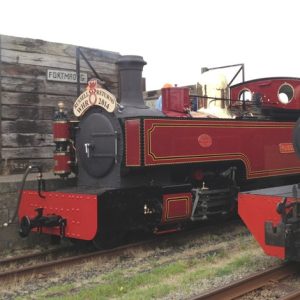 Some dogs get excited about a car journey. Imagine their face when you put them on a train.
The Welsh Highland Heritage Railway in Porthmadog offers heritage train rides and, wonderfully, well-behaved dogs can travel on the main train for free.
There’s also a miniature railway running around the engine sheds, through woodland, across a tiny viaduct and through a tunnel. Apparently they’ve even had a Doberman aboard the miniature train before, which raises several questions about seating arrangements.
Dogs get a water bowl outside the shop too, so they’ve clearly thought about their four-legged passengers.
This is a particularly good option if you want a dog-friendly day out that doesn’t involve walking for six straight hours.
Good to know: Well-behaved dogs travel free. Check the railway’s timetable before making a special journey as running days vary throughout the year.
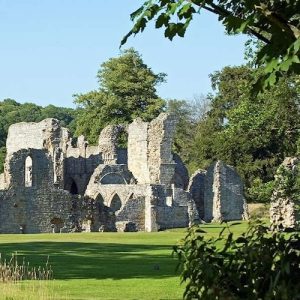 Want atmospheric ruins without fighting through crowds to see them? Bayham Old Abbey is worth knowing about.
The remains of this medieval abbey sit within a landscape designed by famous landscape gardener Humphry Repton. There are large open grassy areas surrounding the ruins and plenty of space to wander around and admire what remains of the abbey.
Dogs are welcome on leads, and the site itself is free to enter, although non-English Heritage members currently pay a small parking charge.
It’s wonderfully unfussy. No giant attraction complex, no trying to persuade your dog that the gift shop isn’t actually a shop selling treats. Just ruins, countryside and a very good picnic spot.
Good to know: Dogs must remain on leads. There are no toilets or food facilities on site, so bring what you need or plan a stop nearby.
 This is for anyone who wants the sort of garden where “we’ll just have a quick look around” turns into several hours.
Dumfries House sits within around 600 acres of grounds, with formal gardens, woodland, an arboretum, tree-lined avenues, water features and a five-acre walled garden.
Dogs are welcome on short leads across much of the estate, although there are restrictions in certain areas including the maze.
It’s a lovely compromise if one member of the household wants immaculate gardens and the other wants a decent dog walk. And by “other member” we obviously mean the dog.
The sheer variety makes it particularly good for photographs too. Woodland dog portrait? Lovely. Grand estate backdrop? Absolutely. Dog staring stubbornly in the opposite direction to the camera? Almost guaranteed.
Good to know: Dogs should be kept on short leads and aren’t allowed everywhere, so check the current access information before visiting.
 The Lake District has no shortage of famous dog walks, but Shap Abbey offers something a little quieter.
The ruins of the medieval abbey sit in the countryside beside the River Lowther, with the remains of its striking tower still standing.
Dogs on leads are welcome and the setting beside the river makes this feel much more like discovering somewhere on a walk than arriving at a major visitor attraction.
There may be livestock around, so this isn’t the place for your dog’s audition for One Man and His Dog. Keep them close and enjoy the scenery instead.
Good to know: Dogs must be on leads and livestock may be present. The site is beside a river and parking conditions can be difficult in wintry weather.
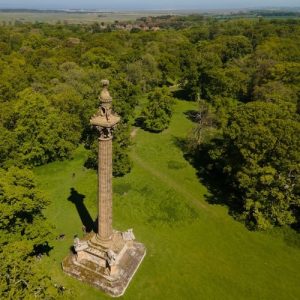 If your dog likes their walks with a bit more grandeur than the local recreation ground, Holkham should do nicely.
The huge park surrounding Holkham Hall is free to explore and comes with sweeping countryside, woodland, a lake, historic buildings and plenty of trails. Dogs are very welcome, and there are even water bowls, dog treats and pupuccinos available around the visitor areas.
The really nice surprise is that dogs aren’t restricted to the park. They’re welcome inside Holkham’s beautiful Walled Garden too, including the Victorian greenhouses, Vinery and exhibition.
There are five sections to explore within the six-acre garden, including an ornamental garden, working kitchen garden and vineyard. So you get a proper garden visit rather than standing outside while somebody else goes in and tells you how lovely it was.
Dogs are also welcome in the Courtyard Café, which makes lunch considerably easier.
Good to know: Dogs need to stay on a short lead throughout the park because of free-roaming deer and other wildlife, and on a short lead within the Walled Garden. Only assistance dogs can enter Holkham Hall. The park itself is free to visit, although parking charges apply
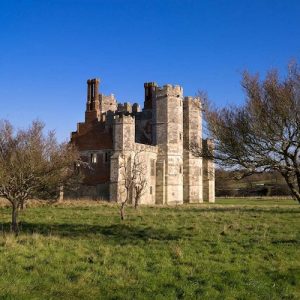 A beautiful ruined abbey, dogs allowed and free entry. That’s a fairly decent return on a day out.
Titchfield Abbey started life as a medieval monastery before later being transformed into a Tudor mansion. Today its enormous gatehouse and ruins make it a surprisingly impressive place to discover tucked away in Hampshire.
Dogs on leads are welcome and there’s a small car park at the site. You can wander among the remains, get some lovely photographs and combine it with a longer local walk if you’ve got a dog who considers anything under 10,000 steps an insult.
It’s also close to Netley Abbey and Portchester Castle if you fancy turning one historic ruin into a full day of them.
Good to know: Dogs must remain on leads and parts of the site have uneven ground. Check current opening times before visiting.
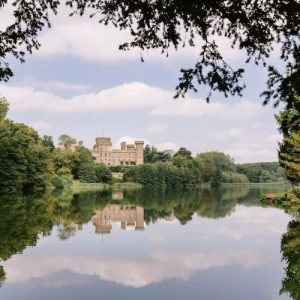 We’ll finish with somewhere that takes being dog-friendly unusually seriously.
Eastnor Castle welcomes dogs not just around its grounds but inside the castle itself. There are dog water stops around the grounds, waste bins, a dog wash and even a dedicated off-lead area among the trees.
Yes, a dog wash. Someone at Eastnor has clearly met a Labrador.
Outside the designated off-lead area, dogs need to stay on their leads, but there are woodland walks, an arboretum and extensive grounds to explore together.
It’s not a ruined castle like Moreton Corbet, but being able to walk through an actual historic castle with your dog is unusual enough to earn it a place on the list.
Good to know: Dogs should be kept on leads except in the designated Dogs-Off-Leads Area. Dogs are normally welcome inside the castle too, although restrictions apply to private events and weddings.
Dog policies can change, particularly during lambing season, nesting season, special events or periods of conservation work, so it’s always worth checking the attraction’s website before making a long journey.
And “dog-friendly” doesn’t automatically mean “off lead”. Many historic sites, gardens and woodland areas require dogs to be kept on leads or under close control to protect livestock, wildlife and other visitors. Forestry England recommends keeping dogs close and in sight, using a lead when necessary and following local signs.
A few things worth throwing in the car:
That last one is important. Not because we’re about to launch into a sales pitch, promise.
Days like these tend to produce the photographs you actually want to keep. Your dog standing beside a castle ruin. Running through woodland. Sitting suspiciously upright on a steam train wondering what on earth you’ve signed them up for.
They’re much more interesting than photo number 847 of them asleep on the sofa.
Although, to be fair, we’d probably keep that one too.