Ever looked over at your pet and wondered how on earth they can possibly be comfortable?
Dogs sleep upside down with their legs pointing in four different directions. Cats fold themselves into seemingly impossible spaces. Rabbits can suddenly collapse onto their sides with enough drama to make a new owner wonder whether they need to call the vet.
And, naturally, we take photos of them doing all of it.
The good news is that most of these strange sleeping positions are completely normal.
While your pet’s favourite sleeping position can’t tell you whether they’re an introvert, an extrovert or secretly plotting to take over the house, it can give you some clues about how comfortable, warm, relaxed and secure they’re feeling.
So, what exactly is your sleeping pet trying to tell you?
Dogs can spend a surprisingly large amount of their lives asleep. Adult dogs commonly sleep for around 12 to 14 hours a day, while puppies and older dogs may need considerably more.
That gives them plenty of time to perfect their preferred sleeping position.
The side sleeper
Dog lying on their side, legs stretched out, completely oblivious to the world?
They’re probably feeling pretty comfortable.
Sleeping on the side leaves some of the dog’s belly exposed, so dogs are more likely to adopt this position when they feel relaxed and secure in their surroundings. It’s also a position associated with deeper sleep, which is why you might notice paws twitching or legs making little running movements.
Presumably they’re dreaming about chasing squirrels.
Or the cheese you didn’t give them earlier.
What it can mean:
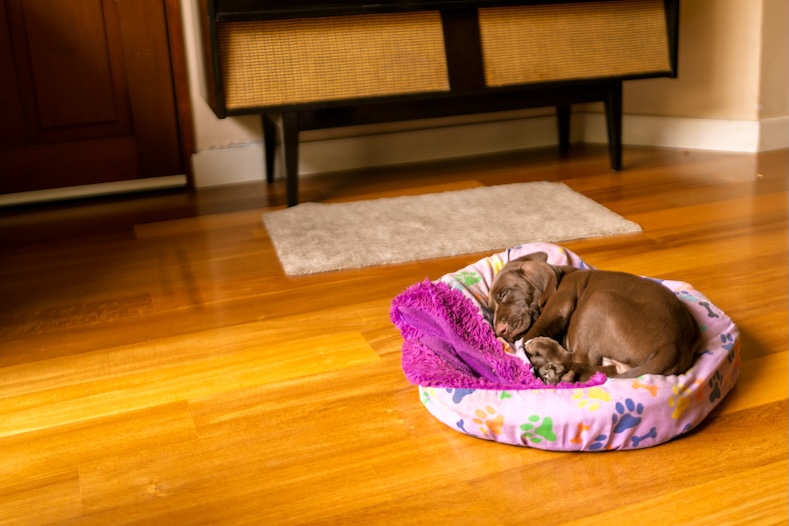
The curled-up doughnut
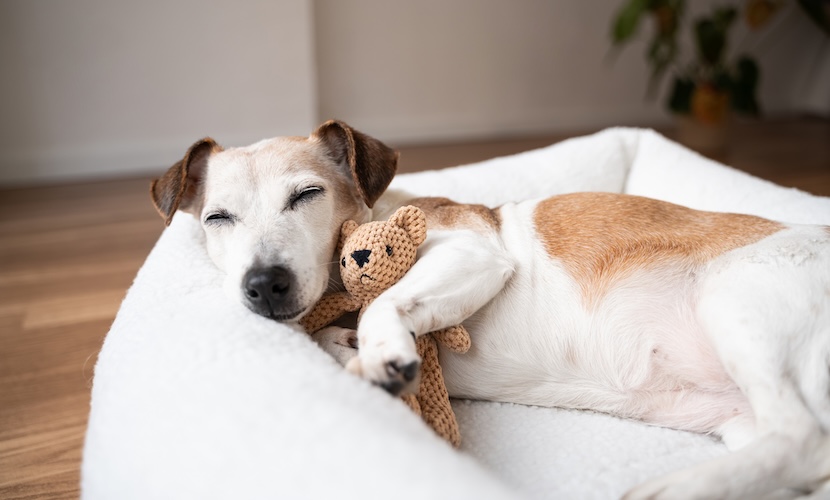
Nose towards tail. Legs tucked in. Maximum dog compressed into minimum space.
The classic doughnut position has some very practical benefits.
Curling up helps a dog conserve body heat and keeps the softer abdominal area protected. It’s an instinctive sleeping position and can be particularly appealing when the temperature drops.
It doesn’t automatically mean your dog is nervous. Plenty of perfectly content dogs simply enjoy curling up.
If your normally sprawled-out dog suddenly starts curling up tightly all the time alongside other changes in behaviour, however, it’s worth paying attention. Changes in normal sleeping habits can occasionally accompany discomfort or illness.
What it can mean:
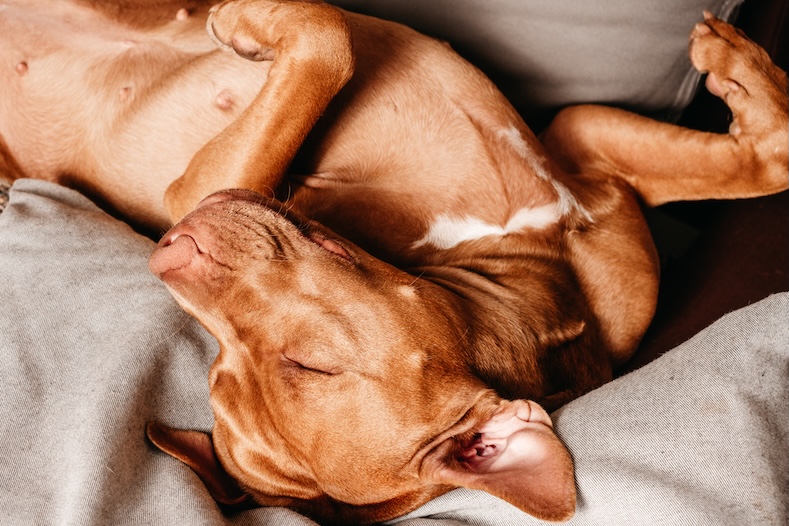
The belly-up sleeper
This is the dog who has absolutely no dignity left to protect.
Back on the floor. Belly exposed. Legs pointing skywards.
From a vulnerability point of view, sleeping belly-up is about as relaxed as a dog can get. Their abdomen is completely exposed and they’re not exactly positioned for an emergency getaway.
For many dogs, that’s a good indication that they feel safe and comfortable.
There is another practical explanation too. Dogs have less insulating fur on their bellies, so exposing the abdomen can help them lose heat. Their paw pads also play a role in temperature regulation, making the legs-in-the-air approach surprisingly sensible on a warm day.
Basically, what looks ridiculous to us is quite efficient dog engineering.
What it can mean:
One important point: a dog showing their belly isn’t always requesting a belly rub. Look at the rest of their body language before assuming you’ve received an invitation.
The lion or sphinx pose
Chest on the floor. Front paws stretched forward. Head resting on or just above the paws.
This is less “I’m completely unconscious” and more “I’m resting, but I’m available if somebody opens the fridge.”
Dogs may use this position when they’re dozing rather than deeply asleep because it allows them to get onto their feet relatively quickly.
What it can mean:
The Superman
Front legs forward. Back legs stretched behind. Belly flat against the floor.
The Superman position is particularly common in puppies and some smaller dogs, although plenty of adult dogs are partial to it too.
The big advantage is obvious once the doorbell rings. A dog can go from horizontal to full-speed household security officer remarkably quickly.
Lying flat on a cooler surface can also be appealing when they’re warm.
What it can mean:
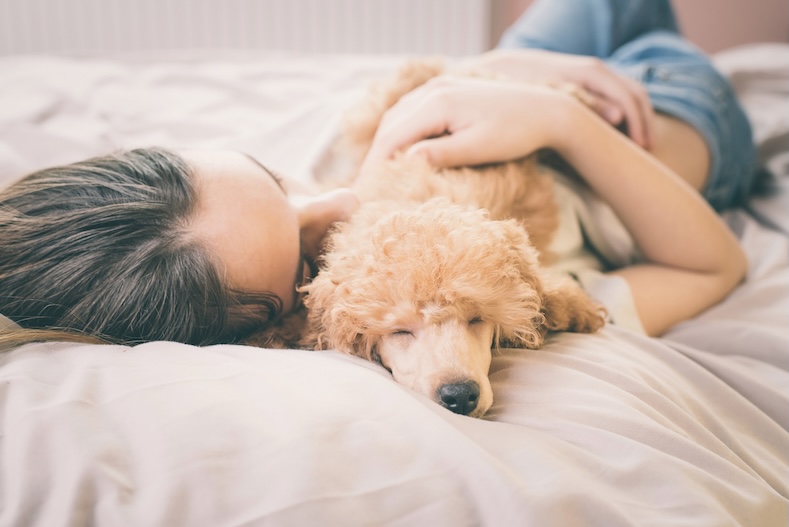
The cuddle sleeper
Some dogs have an entire house available and still decide the only acceptable sleeping location is approximately three centimetres from you.
Or directly on you.
Dogs can choose to sleep beside people or other animals because of warmth, comfort and social bonding. Being close to a familiar person can also provide a sense of security.
What it can mean:
Cats have turned sleeping into something of a professional career.
Domestic cats commonly sleep or rest for around 12 to 18 hours a day, although the amount varies with age, activity and the individual cat.
They also have an extraordinary ability to make almost any object into a bed.
Fresh laundry? Bed.
Cardboard box? Luxury bed.
Laptop you currently need for work? Absolutely premium accommodation.
The curled-up cat
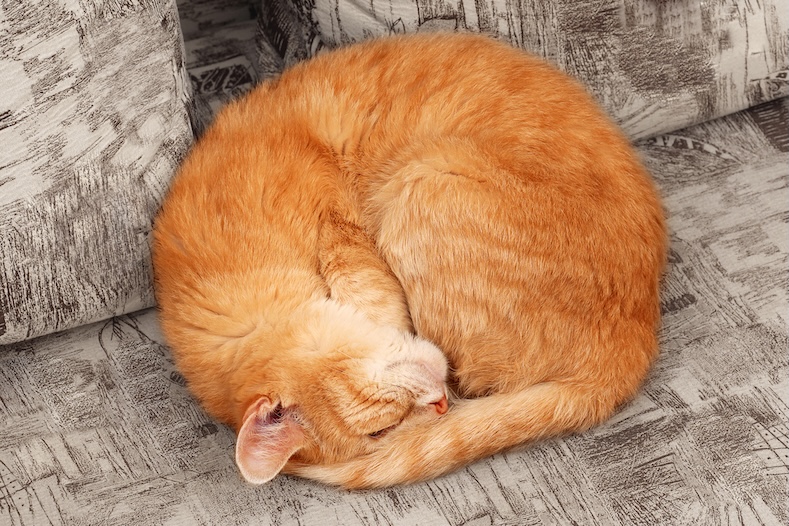
A cat curled into a neat circle with their head tucked towards their body is using one of the most practical feline sleeping positions.
Curling up helps conserve warmth and protects the abdomen. It’s an instinctive position that allows a cat to feel snug while keeping vulnerable areas covered.
What it can mean:
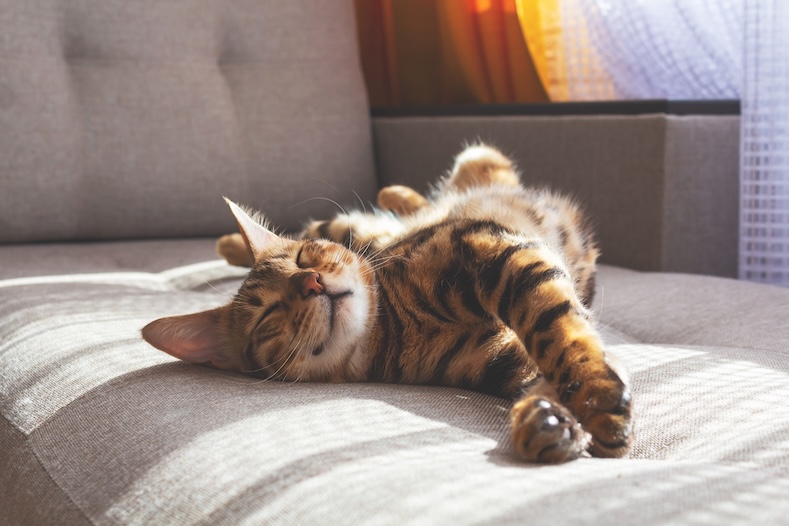
The side sleeper
When a cat stretches out on their side, they’re exposing more of their body than they would in a tightly curled position.
That generally suggests they’re feeling comfortable enough to relax.
Side sleeping can also make it easier for a cat to stretch out fully, and you’ll often see cats shift into this position when they’re settling into deeper sleep.
What it can mean:
The paws-over-the-face sleeper
There are few things more photogenic than a sleeping cat with one paw delicately covering their face.
Unfortunately, they probably aren’t being adorable deliberately.
Covering the face can help a cat retain warmth and may also shield their eyes from light while they’re trying to sleep.
In other words, your cat has invented the sleep mask without having to order one.
What it can mean:
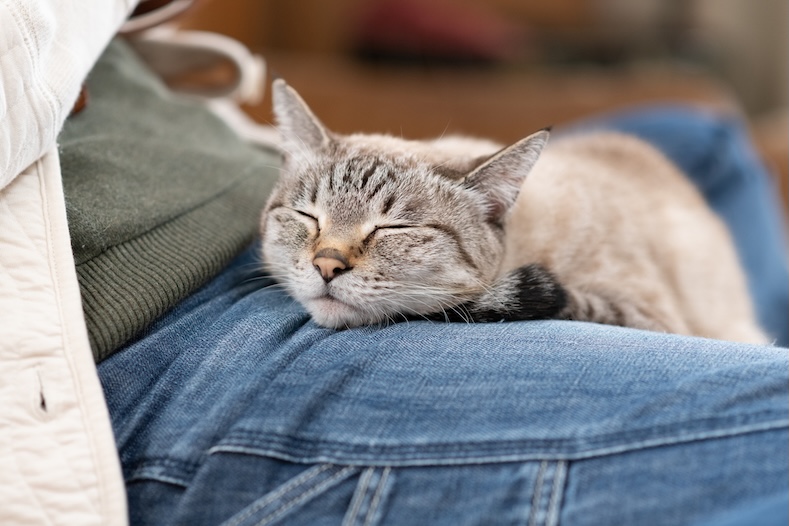
Sleeping on you
Chest, lap, legs, stomach or occasionally your actual head.
Cats frequently choose to sleep close to people they trust. Your body provides warmth, familiar smells and a predictable source of comfort.
What it can mean:
Cats Protection notes that cats generally prefer sleeping places that are warm, comfortable and safe. So when your cat selects you as today’s mattress, take it as a compliment.
Even if you desperately need the toilet.
Rabbit sleep can be slightly more mysterious.
As prey animals, rabbits are naturally alert to their surroundings and don’t always sleep in ways humans immediately recognise. They’re crepuscular, meaning they’re generally most active around dawn and dusk, and they tend to sleep in several shorter periods rather than one long nightly sleep.
And yes, sometimes rabbits sleep with their eyes partly open.
Convenient when you’re an animal that would rather know what’s happening around you.
The rabbit loaf
Cats don’t have exclusive rights to loafing.
A relaxed rabbit may tuck all four feet beneath their body and sit in a compact loaf shape.
This can be a comfortable resting position and lets them remain reasonably prepared to move if something catches their attention.
What it can mean:
The stretched-out rabbit
A rabbit stretched along the floor with their back legs extended behind them is generally showing relaxed body language.
A rabbit that felt it needed to escape immediately would benefit from keeping its legs underneath its body. Stretching them out therefore tends to appear when a rabbit is comfortable enough to relax.
PDSA identifies lying completely stretched out as one of the body positions commonly seen in relaxed, happy rabbits.
What it can mean:
The rabbit flop
The first time you see a rabbit flop, it can be alarming.
One moment they’re sitting normally.
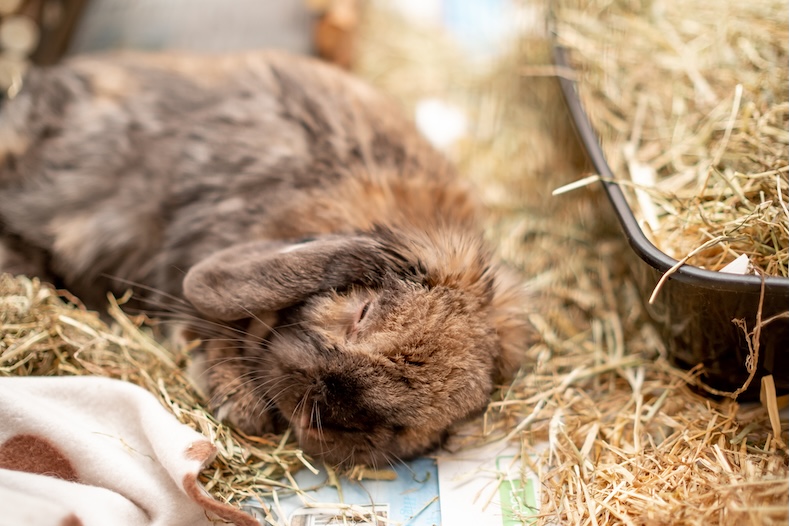
The next they dramatically throw themselves onto their side.
For a relaxed rabbit, this can be completely normal and is often a very positive sign. A rabbit lying fully on their side is placing themselves in a less immediately mobile position, which can indicate that they feel safe enough to properly relax.
In other words, the performance may look like a Victorian fainting scene, but the rabbit is probably having a lovely time.
What it can mean:
The half-asleep, eyes-open rabbit
This one can confuse new rabbit owners.
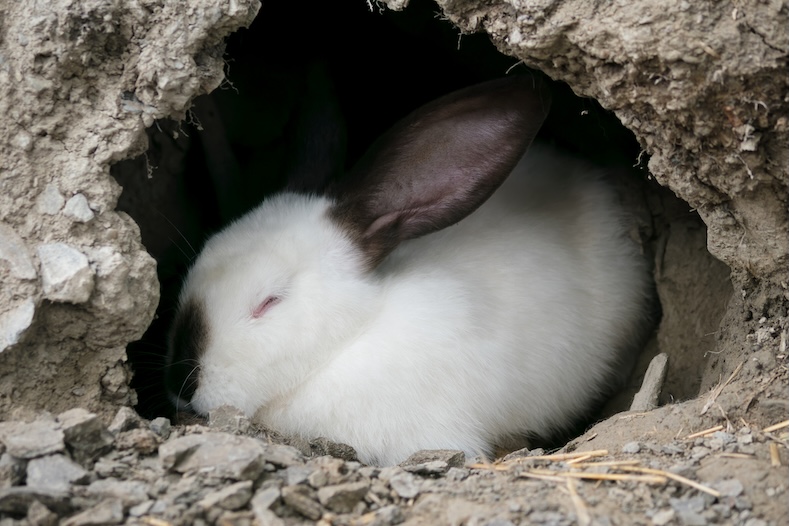
Rabbits can doze while appearing surprisingly alert, sometimes with their eyes partly open.
As prey animals, being able to rest without completely disconnecting from the world has obvious advantages. Rabbits also alternate between periods of light rest and deeper sleep throughout the day and night.
Signs that your rabbit is genuinely relaxed can include a loose body position, tucked or stretched-out legs and generally calm behaviour.
What it can mean:
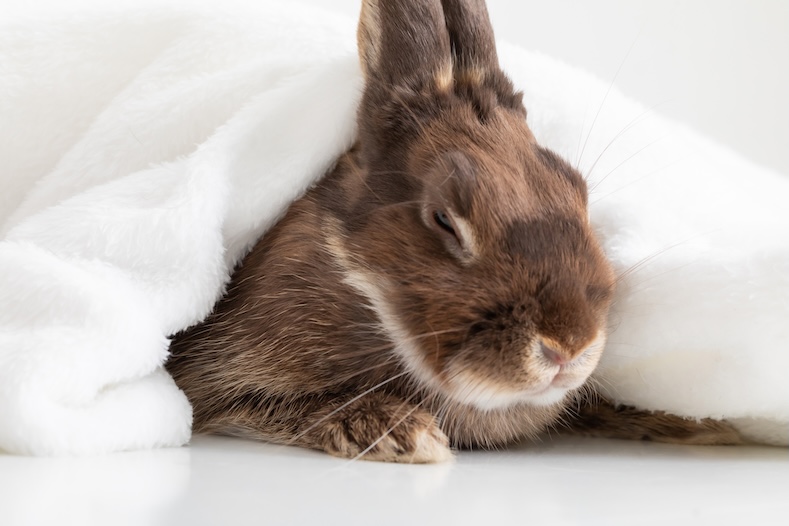
A little, but probably not in the way social media would have you believe.
There isn’t good evidence that sleeping upside down means your dog is an extrovert, that a curled-up cat is shy or that a stretched-out rabbit is especially confident as a personality trait.
Sleeping positions are much better interpreted as clues about what’s happening right now.
They can reflect things such as:
And context matters.
A dog curled into a ball on a cold December evening may simply be keeping warm. The same dog suddenly remaining tightly curled during a summer heatwave while appearing unusually quiet deserves more attention.
Likewise, one strange sleeping position isn’t usually something to worry about. Pets are extraordinarily creative sleepers.
Changes from what’s normal for your pet are more useful than comparing them with somebody else’s.
The best person to recognise unusual behaviour in your pet is often the person who sees them every day.
Speak to your vet if you notice a significant or persistent change in sleeping behaviour alongside signs such as:
For rabbits in particular, remember that they naturally hide signs of illness because they’re prey animals, so subtle changes in normal behaviour can be important.
We’ve focused on dogs, cats and rabbits here, but we know Britain’s homes contain a much wider collection of sleepy characters.
Perhaps you’ve got a guinea pig who has perfected an unusual napping position, a hamster who sleeps somewhere completely unexpected, or a pet bird whose bedtime routine deserves an explanation of its own.
If there’s another pet you’d love us to cover, get in touch and let us know. We’d love to hear which animals and sleeping positions we should investigate next.
And, obviously, we’ll take any excuse to talk about sleeping pets.
Whatever their sleeping position means, there is one thing most sleeping pets have in common.
They look ridiiiiiiiiiiculously cute while they’re doing it.
Cat and dog parents in particular will probably know exactly what we mean. Check your phone gallery and there’s a good chance you’ll find more sleeping pet pictures than you’d ever admit to taking.
Sleeping on the sofa.
Sleeping upside down.
Sleeping with their tongue slightly sticking out.
Sleeping in the expensive bed you bought specifically for them.
Sleeping next to the expensive bed you bought specifically for them…
Before you know it, you’ve got hundreds of photos of an animal doing precisely nothing.
And we completely understand.
Those everyday photos often become some of the ones we treasure most. They capture your pet exactly as you know them at home, relaxed, comfortable and completely themselves.
So rather than leaving your favourite sleeping pet photo somewhere between 4,000 other pictures on your phone, why not turn it into something you can keep?
A personalised metal pet print can transform one of those wonderfully ordinary moments into a piece of wall art you’ll see every day.
Maybe it’s your dog snoozing belly-up without a care in the world. Your cat curled into a perfect little doughnut. Or the photo where your rabbit performed such a dramatic flop that you briefly questioned whether everything was OK.
They’re the little moments that make your pet yours.
And they’re worth remembering.
Because phone galleries get fuller, phones get replaced and photos are easily forgotten amongst thousands of others.
But that spectacular belly-up sleeping pose?
Now, THAT deserves a place on the wall.